The Anatomy of an Empire: Unpacking Mexico's Football Titan
In the high-stakes ecosystem of Latin American sports, few institutions command the authority, financial muscle, and intense public scrutiny of Club América. Known colloquially as Las Águilas (The Eagles), the Mexico City powerhouse is far more than a soccer team; it is a cultural lightning rod and a commercial juggernaut. Our investigation into the club’s rise reveals an intricate blueprint of corporate strategy, media supremacy, and unyielding competitive drive that redefined modern football in the Americas.
Founded in 1916, Club América’s modern trajectory was radically reshaped in 1959 when broadcasting magnate Emilio Azcárraga Milmo purchased the team for Grupo Televisa. What followed was a deliberate strategy to position the club as the anti-hero of Mexican football. While rival clubs emphasized home-grown, working-class narratives, América unashamedly flaunted wealth, purchasing elite foreign talent and cultivating a winning culture built on unapologetic arrogance. This approach crystallized in their infamous modern battle cry: "Ódiame Más" (Hate Me More).
The Business Model Behind Liga MX's Most Successful Club
Behind the silverware lies an institutional framework designed for sustained dominance. Operating out of the famed Coapa training facility in southern Mexico City, Club América functions as both a elite sporting academy and a lucrative global brand. Their operational playbook rests on three financial and structural pillars:
- Media and Commercial Synergy: Leveraging deep ties with Televisa and independent media distribution networks to secure top-tier international sponsorships and broadcast revenue across North America.
- Targeted Global Recruitment: Maintaining an expansive scouting network across South America and Europe to acquire proven foreign stars who can deliver immediate results.
- High-Yield Youth Development: Producing world-class homegrown talent—such as Raúl Jiménez, Edson Álvarez, and Diego Lainez—that generates multi-million dollar transfer fees to European clubs, reinvesting capital back into the roster.
"América does not participate in Mexican football; América dictates its pace, its economy, and its headlines. Love them or despise them, they remain the undisputed engine of Liga MX."
The Fortress of Azteca: Historical Dominance and Rivalries
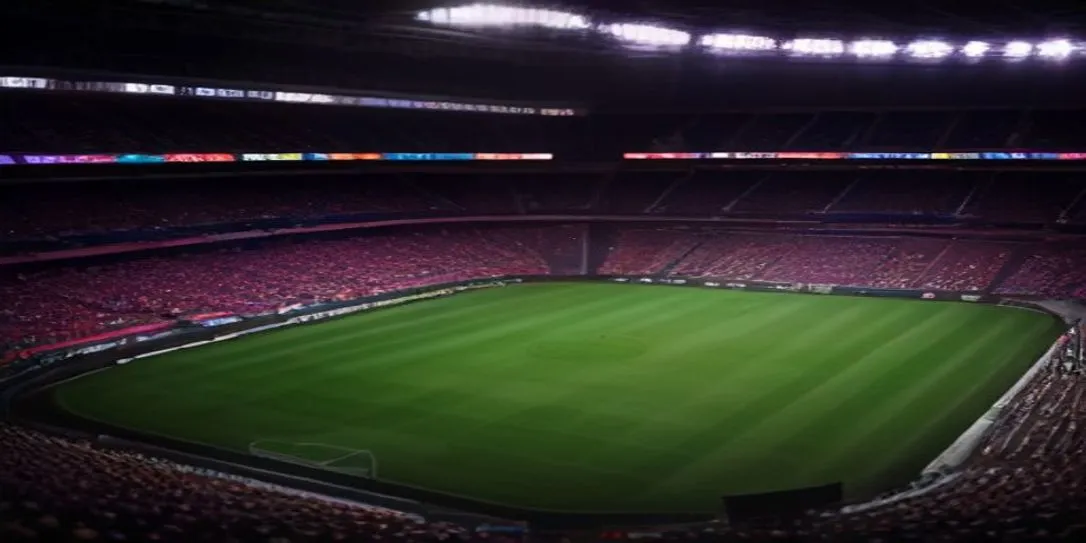
To understand the club's aura, one must examine their historic home, the Estadio Azteca. Situated 7,200 feet above sea level, this colossal venue—host to two FIFA World Cup finals—serves as an intimidating fortress for visiting opponents. Within these walls, Club América has assembled an unprecedented resume, capturing a record-setting 15 Liga MX championships, multiple Copa MX titles, and a record seven CONCACAF Champions Cup trophies.
El Clásico Nacional: A Clash of Philosophies
The defining narrative of Mexican sports remains El Clásico Nacional—the fierce rivalry between Club América and Guadalajara (Chivas). This confrontation transcends mere points on a league table; it represents a fundamental ideological clash. While Chivas restricts its squad exclusively to native Mexican players, América aggressively scours the globe for elite talent. This philosophical divide creates an electrifying tension that routinely draws tens of millions of viewers across Mexico and the United States.
The Modern Era: Tactical Rebirth and the Drive for Grandeur
Under current management, Club América has entered another golden age of tactical efficiency. Guided by strategic discipline and deep squad rotation, the club achieved a historic back-to-back championship (*bicampeonato*) in recent tournaments, silencing critics who questioned their ability to maintain hunger at the summit. With key figures like team captain Henry Martín and an array of international stars, the squad continues to raise the standard for domestic excellence.
As football in North America prepares for the 2026 FIFA World Cup, Club América stands uniquely positioned to capitalize on the region’s booming soccer market. Through strategic matches in the United States and evolving digital entertainment platforms, Las Águilas are executing a long-term playbook to ensure their dominance isn't merely localized to Mexico City, but felt worldwide for decades to come.
Sıkça Sorulan Sorular
Club América explicitly embraced an anti-hero persona in the late 20th century under media giant Televisa, adopting the famous slogan 'Ódiame Más' (Hate Me More). Their immense financial backing, high-profile international signings, and sustained dominance built a culture where rival fans love to see them fail.
Club América holds the record for the most Liga MX league titles in Mexican football history, having secured 15 professional league championships alongside numerous CONCACAF Champions Cup trophies.
The club is controlled by Grupo Ollamani, an entity spun off from Grupo Televisa, the Latin American media conglomerate led by the Azcárraga family, who bought the team in 1959.
El Clásico Nacional (The National Classic) is the historic rivalry match between Club América and Chivas de Guadalajara. It represents a fundamental cultural divide in Mexican sports: América's tradition of importing top global talent versus Chivas' strict policy of fielding only native Mexican players.